NWSA: 3D Studio
New World School of The Arts
Art 1201C2 Section 1 Fall 2016
Tuesday and Thursday 1:10pm -3:45 pm
Instructor: Justin H Long
Room: 5112
Email: long.nwsa@gmail.com
Class Blog: nwsasculpture10.blogspot.com
This is a “Hands On” Studio course with an introduction to the world
of Kinetic, Experiential, and Performative Sculpture. We will discuss in depth
the history of these mediums and develop the technical skills to explore them
ourselves. Using found and new materials, the projects will reflect upon
history, theory and personal creativity. Additional readings will be posted to
the blog as well as adjustments to the class schedule.
CLASS RESPONSIBILITIES AFFECTING YOUR GRADE:
*Participation in class discussions, extracurricular assignments and
in critiques of fellow students’ projects.
*Completing all assignments on time, including any writing
assignments.
*Process must be shown and is as important as the final product.
*Approximately half of your grade is determined by your process
sketches and end of the semester project.
EVALUATION:
Evaluation is based on technical ability, creative content,
progressive development, and the degree on which you challenge yourself.
90-100 A – outstanding: work, participation, effort and, attitude
remarkable
80-89 B – good: work, participation, effort and, attitude beyond
expectation
70-79 C - average: all work completed
60-69 D – poor: any one of the requirements below expectation
59-below F – failing: work incomplete, effort and/or, attitude
inadequate
SKETCHBOOK:
Maintain a sketchbook that contains all of your
research, sketches, ideas and inspirations. Document all your brain storms,
questions, etc. Bring this journal to every class. This will serve as
documentation of your thought process, and will be reviewed by the instructor
EVERY TUESDAY CLASS.
CLASS AND SHOP RULES:
Cell phones and other electronic devices are
limited to PRODUCTIVE uses. Productive uses include listening to music,
researching artists and materials, and taking notes. Internet usage must be
limited to class- related research (no checking email, social networking sites,
etc). Continued use, after a warning, will result in disciplinary action.
• Food and Drink are not allowed in the wood
shop. • Spray paint, resin and mount
adhesives must be used in the loading dock. • All materials and projects will
be stored on 10th grade shelves. Anything left out will be discarded. • Studio time ends promptly at 3:30pm. The
final 15 mins of class will be used for clean up.
ADDITIONAL SHOP ACCESS:
Our classroom consists of two rooms- the wood
shop and plaster area. Students may do work outside of class-time in the
plaster room, as long as there is no class in session or by obtaining
permission from the instructor teaching at the time you wish to work. No one is
permitted in the wood shop without instructor supervision. A lab computer is
accessible during class hours; however files saved on the computer are not
secure- plan accordingly. Access to certain shop equipment requires that you
pass a safety orientation.
ATTENDANCE:
Attendance is required during the days and
hours that the school is in session. Students are expected to: attend class as
scheduled; arrive at class on time: and demonstrate appropriate behavior and a
readiness to learn. Students are responsible for catching up and getting any
assignments notes and readings missed because absence.
-Class attendance - Students are to be counted
in attendance if they are physically present in class for at least half of the
class period, have been excused by the teacher on class-related assignment, or
have been requested by a member of the school support staff for an approved
school activity.
-Tardiness - A student is considered tardy if
he/she is not present at the moment the school bell rings for the class
assigned. -Early Sign-outs – No student shall be released within the final 30
minutes of the school day unless authorized by the school principal or
principal’s designee, e.g., emergency, sickness.
Source; Miami-Dade curriculum Bulletin 2012-14,
page 26.
HONOR CODE:
Students are expected to follow the honor Code
of the New World School of The Arts. All assignments must be original and
completed independently during the quarter.
CRITIQUES:
You are expected to be an enthusiastic
participant in this class and take ownership of your work and development as a
creative professional. The function of critiques is not only to receive
feedback on your work, but to build essential skills of presentation,
negotiation, persuasion as well as learning to break down others projects.
Projects must be ready for peer review BEFORE
class or critique begins, unless otherwise specified. Craftsmanship and presentation
greatly affect your grade!
DISABILITIES:
Reasonable accommodations will be made for
students with documented disabilities. Please contact the instructor to work
out the details for any accommodations.
DISCLAIMER:
This syllabus is subject to change at any time
during the quarter. You will be notified of any changes or will be issued a new
syllabus.
PROJECTS:
Ready made display - Find an object
that has already been made and create a new way of displaying this object which
elevates it to become art. See Marcel Duchamp Fountain
Additive Volume - Each student
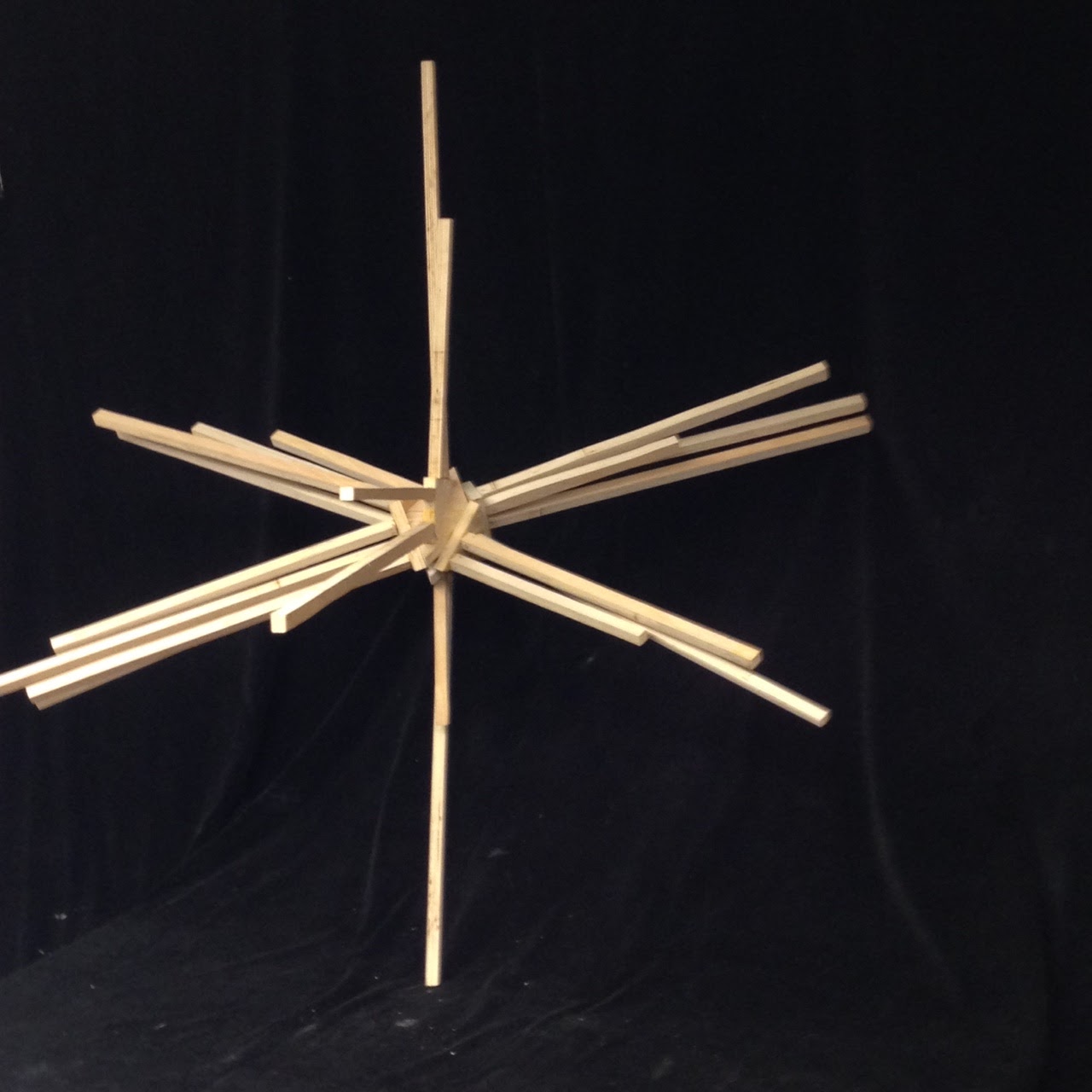
will be given a 24"x24" piece of plywood and they must create a 3
dimensional object that occupies the volume of an invisible 24"x24"
cube touching all 6 sides. See Chris Burden Bunker
Mold Making - Using Plaster
and Latex mold making techniques, you will make a mold from a readymade object
and make multiples of it. Be prepared to defend why there needs to be the
number of multiples you have made. See Ai Wei Wei Sun Flower Seeds
Site Specific - Using only
cardboard and masking tape, you will chose a spot in the class room to create a
site specific piece. One that will not work anywhere but the place you have
chosen. You will be required to collect your own cardboard, so start early. See
Jean Claude and Cristo Surrounded Islands
Weighted Mobile - Each student
will start with a heavy object. A hanging mobile will be created with at least
6 elements using the object as a counter weight. See Alexander Calder
Hanging Mobile
Activated Sculpture - Create a
sculpture that needs a human presence to activate it. It needs to show evidence.
See Robert Morris Untitled (Box for Standing)